
"BRUNEI Darussalam is actively involved in Southeast Asia," confirmed a source yesterday about the regional efforts to curb unconventional petty thefts occurring in the South China Sea.
Despite the fact that Brunei's maritime law enforcement agency is not participating in the two-day conference this year, which is being attended by 150 participants from 24 countries, at the Langkawi International Maritime and Aerospace (LIMA) Exhibition 2009 International Maritime Conference, the Sultanate is one of 14 members of the Regional Cooperation Agreement in Combating Piracy and Armed Robbery against Ships in Asia (ReCAAP), when it joined in 2006.
The Langkawi maritime conference is being held to find newer ways to curb this problem, which the Malaysian Defence Minister Datuk Seri Dr Ahmad Zahid Hamidi said, that if left unchecked, "would lead to high-tech piracy activities similar to the piracy in the Gulf of Aden".

He went on to express: "This situation causes problems to the maritime patrol and enforcement activities because the pirates know that no country could impose its law in the water."
Brunei's maritime boundaries are patrolled by the Royal Brunei Navy that "works very closely" with the Royal Brunei Marine Police, said the source, "especially in the deeper waters, as the Royal Brunei Marine Police as yet do not have the capabilities for deep-water operations".
However, one of the joint responsibilities of the two maritime agencies is to prevent piracy but although there have been no reports or incidents of piracy or armed robbery in Brunei waters, the Royal Brunei Marine Police are still actively taking preventative measures to prepare against any unforeseen contingencies.
"Through ReCAAP, we can learn of the experiences from other countries of dealing with piracy," said the source, "but more importantly, we are learning to come up with our own strategies whilst closely monitoring to see that the trends of piracy patterns do not spill over into Brunei's waters."
The current extent to which Brunei's maritime patrols are focused on involve netting in illegal fishing activities from neighbouring countries, as well as "showing the flag" at the maritime borders.
There have been several reports made by international news agencies, which have yet to be confirmed by the Ministry of Defence, of the acquisition of several new patrol boats for the Royal Brunei Navy.
If these reports are proved correct, it would surely provide a much-needed boost in terms of Brunei's offshore capabilities in conducting maritime surveillance patrols, especially with the well-known fact that the current naval platforms operated by the Royal Brunei Navy are now ageing and thus largely ill-equipped to handle deep-water operations.
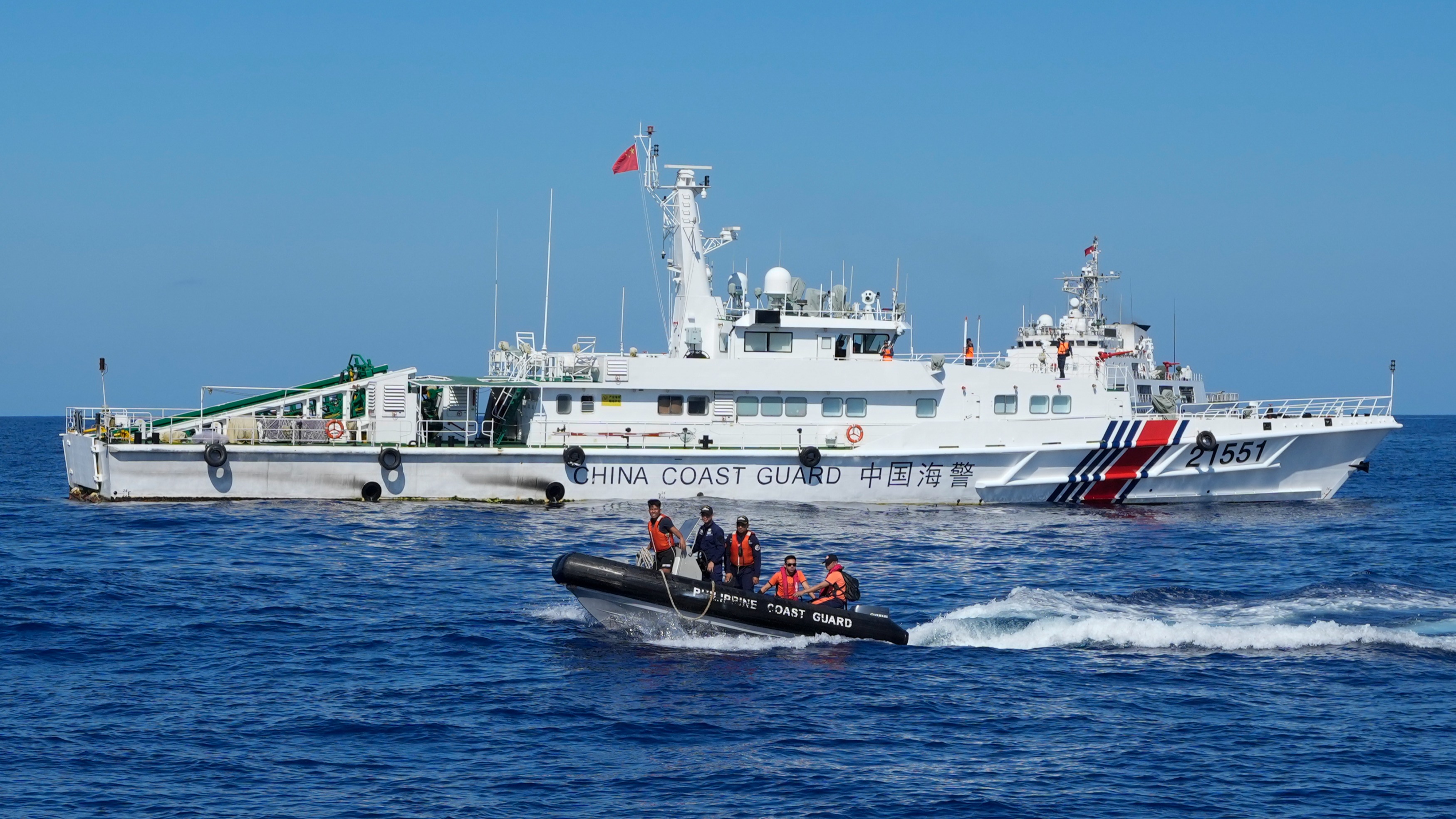
However, despite the close coordination and information sharing between the 14 Asian signatories of ReCAAP, the Malaysian defence minister pointed out the further complexity in their goals due to the fact that the Southeast Asian maritime boundaries are also being contested by four countries - Brunei, Malaysia, Philippines and Vietnam - and China were involved in overlapping claims to the Spratly Islands.
"The five countries should not be too focused on their claims on the Spratly's," urged the Malaysian defence minister, adding that the four neighbouring countries bordering the south China Sea collaborate in conducting enforcement activities in the water.
